We put licensed adjusters on your roof — not a salesperson — with cameras, a moisture meter, and knowledge of what your specific policy covers. Then we build the claim the way it should have been built the first time.
Repair vs. replacement: the fight that decides your claim
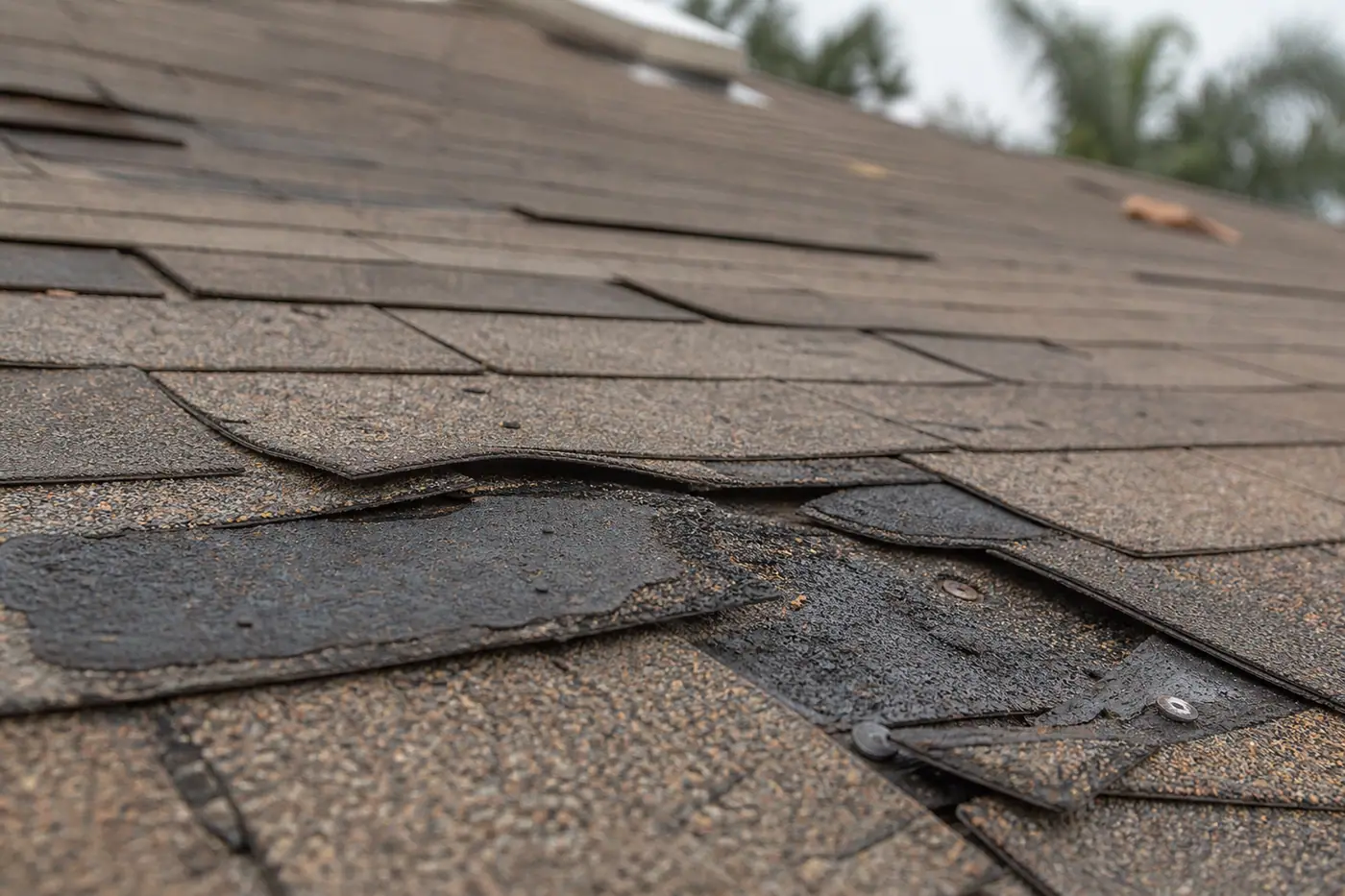
A carrier will almost always prefer to pay for a 'repair' — a few shingles, some sealant — even when matching shingles are discontinued or the decking underneath is compromised. Florida's building code has matching and repair provisions that often make a partial repair impractical or non-compliant, and policies frequently include ordinance and law coverage that pays for code-required upgrades. Those arguments only help you if someone makes them. That's our job.
Common roof claims we handle in Lakeland
Central Florida roofs take a beating: summer thunderstorms nearly every afternoon from June through September, straight-line winds, the occasional hail event, and hurricanes on top of that. We regularly handle:
- Shingle roofs with wind creasing, uplift, or blow-offs
- Tile roofs with cracked, slipped, or broken tiles
- Metal roof panel and fastener damage
- Flat and low-slope roof membrane damage on commercial buildings
- Leaks around valleys, flashing, skylights, and vents
- Interior ceiling and insulation damage that followed a roof leak
Older roof? You still have rights
Florida law now limits how carriers can refuse to write or renew coverage based on roof age alone, and an older roof doesn't mean storm damage isn't covered. Age affects value calculations, not whether a covered peril occurred. If your claim was denied with a one-line letter about 'wear, tear, and deterioration,' get a second opinion before you accept it.
Questions about roof damage claims
The insurance company says my roof damage is just wear and tear. Now what?
That's the most common denial language in Florida. Wear and tear and storm damage can exist on the same roof — the question is whether a covered peril caused damage, and that's a factual dispute we document and argue with photos, weather data, and a proper inspection.
Should I get a roofer or a public adjuster first?
A roofer can tell you what repairs cost. Only a licensed public adjuster (or an attorney) can legally negotiate your insurance claim on your behalf in Florida. We work alongside your roofer — their estimate becomes part of the evidence.
Will my rates go up if I file a roof claim?
Rates in Florida are driven mostly by the statewide market, and carriers can't non-renew you simply for filing a single claim from a covered peril. Not filing, meanwhile, leaves you paying out of pocket for damage you've been insuring against all along.