These 'ordinary' storm claims have one advantage over hurricane claims: your standard deductible usually applies instead of the percentage hurricane deductible. That often makes a storm claim worth filing when a similar hurricane claim wouldn't be. It also means carriers fight harder on causation — was it really that storm? We answer that question with weather data and physical evidence.
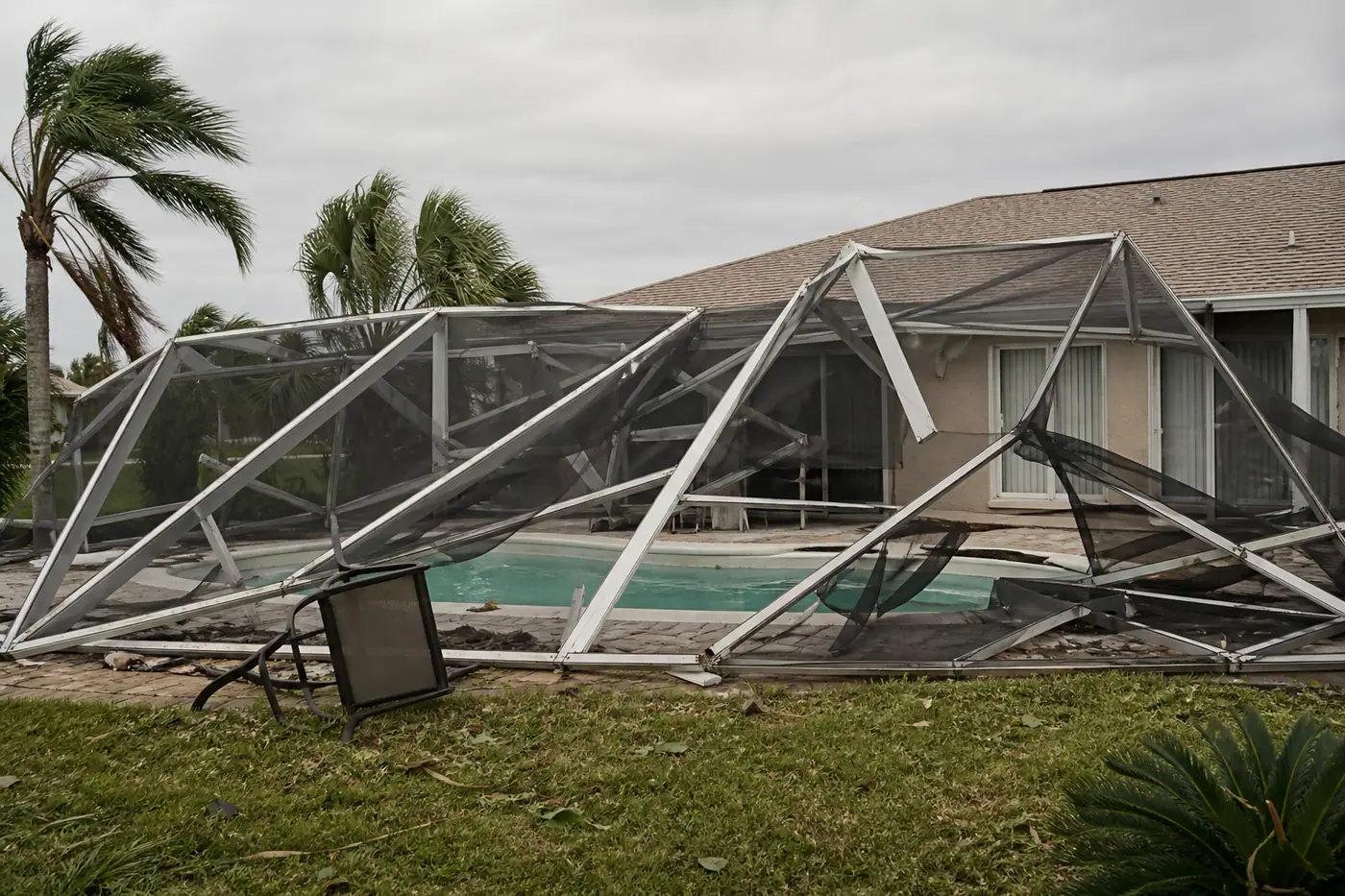
Storm damage we see across Polk County
- Wind-damaged shingle, tile, and metal roofs
- Hail bruising on shingles, dented gutters, AC fins, and window screens
- Lightning damage to electrical panels, appliances, wells, and pool equipment
- Tree and limb impact to roofs, fences, and vehicles under carports
- Wind-driven rain intrusion through damaged openings
- Pool cage and screen enclosure failures
The causation fight
When there's no named hurricane on the news, carriers get skeptical. Their engineer may claim the damage is old, or from 'foot traffic,' or thermal cracking. We counter with certified weather reports for your exact address and date of loss, damage patterns consistent with wind direction, and comparison of your roof to undamaged reference areas. Storm claims are winnable — they just have to be proven, not merely reported.
Questions about storm & wind claims
I didn't notice damage until weeks after the storm. Is that a problem?
It's common — most people don't get on their roof after every thunderstorm. Report promptly once discovered, and let us establish the date of loss with weather records. Delayed discovery is not the same as an old, excluded loss.
Lightning hit near my house and now my AC and appliances are dead. Covered?
Usually yes — lightning is a core covered peril, and near-strikes cause power surges that destroy compressors, boards, and electronics. An electrician or HVAC tech statement attributing the failure to surge is strong evidence, and we help obtain it.
Does a tornado claim use my hurricane deductible?
No — unless the tornado occurred during a named hurricane, your standard all-perils deductible applies. That distinction alone can be worth thousands, and carriers occasionally apply the wrong one.